

Architect in Collingham: Planning-Led Architectural Services in Collingham, Nottinghamshire
- Iain Orme
- Mar 5
- 4 min read
If you are looking for an architect in Collingham, whether for a residential extension, replacement dwelling or rural development, understanding local planning policy — including the emerging Collingham Neighbourhood Plan — is essential.

Collingham (NG23), located between Newark and Lincoln, sits within the administrative area of Newark and Sherwood District Council. Planning decisions here are shaped not only by district policy and national guidance, but increasingly by locally prepared neighbourhood policy.
As a Nottinghamshire-based practice working locally, MO Architects provides planning-led architectural services in Collingham, helping homeowners and landowners design intelligently and secure planning permission with reduced risk.
Planning Permission in Collingham
Planning applications in Collingham are determined by Newark & Sherwood District Council and assessed against:
The Local Development Framework
Residential design and amenity policies
Settlement boundary policies
Countryside protection policies
The emerging Collingham Neighbourhood Plan
The emerging Neighbourhood Plan is particularly important. While not yet fully adopted, it begins to carry increasing material weight as it progresses through consultation and examination stages.
This means proposals in Collingham must demonstrate:
Respect for village character
Appropriate scale and massing
Sensitivity to landscape setting
Protection of local identity
A planning-aware architect in Collingham will consider both adopted and emerging policy before design proposals are fixed.
The Emerging Collingham Neighbourhood Plan
The Collingham Neighbourhood Plan has been prepared locally to shape the future growth and character of the village.
Its objectives typically focus on:
Managing housing growth responsibly
Protecting green gaps and countryside setting
Supporting high-quality design
Maintaining village scale and identity
Ensuring development integrates appropriately
As the plan progresses toward adoption, its policies gain increasing influence in planning decisions.
For homeowners and developers, this means proposals should:
Avoid over-dominance
Respect established building lines
Use materials appropriate to village character
Demonstrate thoughtful design rationale
Ignoring emerging neighbourhood policy can weaken a submission.
Residential Extensions in Collingham
Many homeowners searching for an architect in Collingham are considering:
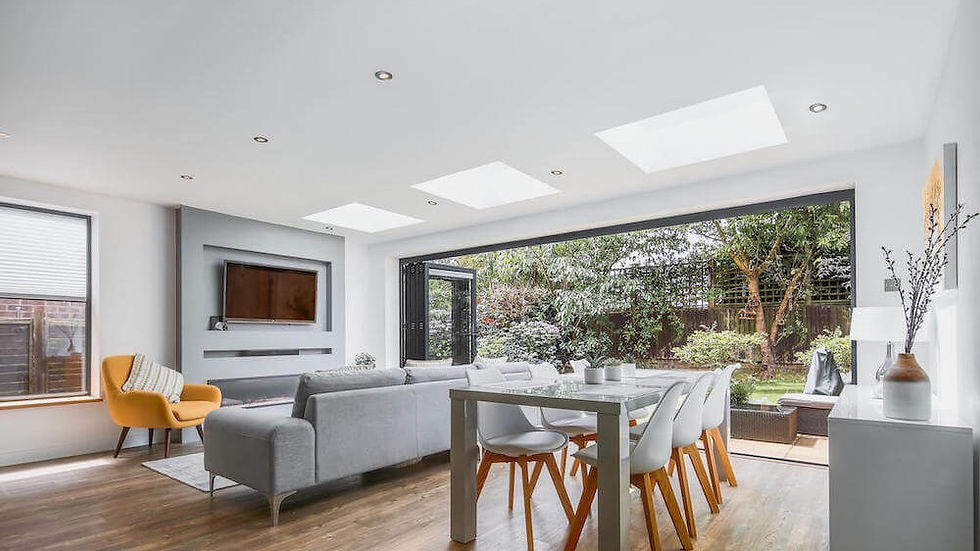
Rear kitchen-dining extensions
Two-storey side additions
Loft conversions
Garden rooms
Home working spaces
While some smaller projects may fall under permitted development rights, others require full planning permission — particularly where:
The extension alters roof form significantly
The scale appears disproportionate
Neighbouring amenity is affected
The property lies close to open countryside
Village settings often attract close scrutiny regarding dominance and visual impact.
Subtle design adjustments can significantly improve approval prospects.
Replacement Dwellings & Edge-of-Settlement Sites
Collingham transitions quickly into open countryside. Development beyond defined settlement boundaries is typically more restricted.
Replacement dwellings may be supported where they:
Maintain appropriate footprint
Respect rural character
Avoid suburbanisation of agricultural settings
Demonstrate high design quality
Emerging neighbourhood policies often reinforce protection of green gaps and landscape character.
Early feasibility advice is particularly important for rural or edge-of-village sites.
Village Character & Design Sensitivity
Collingham has a varied but cohesive architectural character — traditional brick homes, modern infill, and rural edge properties.
Successful architectural proposals in Collingham typically demonstrate:
Proportionate scale
Subordination to the original dwelling
Appropriate ridge heights
Consistent material palette
Clear relationship to neighbouring properties
Overdevelopment and excessive scale are common reasons for refusal in village contexts.
Good architecture here balances ambition with contextual awareness.
Working Within Newark & Sherwood Policy
Understanding how Newark and Sherwood District Council interprets policy locally is critical.
Applications are assessed not just on aesthetics, but on:
Policy compliance
Impact on residential amenity
Sustainability
Character and design quality
A planning-led Collingham architect will:
Review planning history
Assess district and emerging neighbourhood policy
Identify potential objections
Design around constraints
Prepare robust supporting documentation
This structured approach improves the likelihood of approval and reduces delay.
Contemporary Architecture in Collingham
Contemporary residential design can be supported in Collingham where it:
Respects village scale
Demonstrates material quality
Maintains appropriate proportions
Integrates sensitively with surroundings
Modern architecture does not need to imitate historic detail — but it must demonstrate contextual understanding.
Clear design logic strengthens planning arguments.
From Planning to Construction
Planning permission is only the first stage.
Technical drawings must:
Comply with Building Regulations
Coordinate structure and services
Provide clear construction detail
Support accurate contractor pricing
Clarity at technical stage protects budgets and reduces site uncertainty.
Buildability is as important as visual design.
Frequently Asked Questions – Architect Collingham
Does the Collingham Neighbourhood Plan affect my extension?
Yes. As the emerging Neighbourhood Plan progresses, it increasingly influences decisions. Proposals should demonstrate alignment with its objectives.
Do I need planning permission in Collingham?
It depends on scale and context. Larger extensions or projects near settlement boundaries typically require permission.
Can I replace a dwelling near open countryside?
Possibly, but proposals must respect rural character and comply with both district and emerging neighbourhood policy.
Start With Strategy
If you are considering appointing an architect in Collingham, the most important first step is understanding what is realistically achievable under district policy and the emerging Collingham Neighbourhood Plan.
You can begin by using our Planning Permission Checker to quickly assess whether your proposal is likely to require permission and identify key constraints.
Alternatively, contact MO Architects to arrange an initial feasibility discussion for your Collingham project.
In villages like Collingham, successful architecture is not accidental — it is strategic, contextual and policy-aligned.


Comments